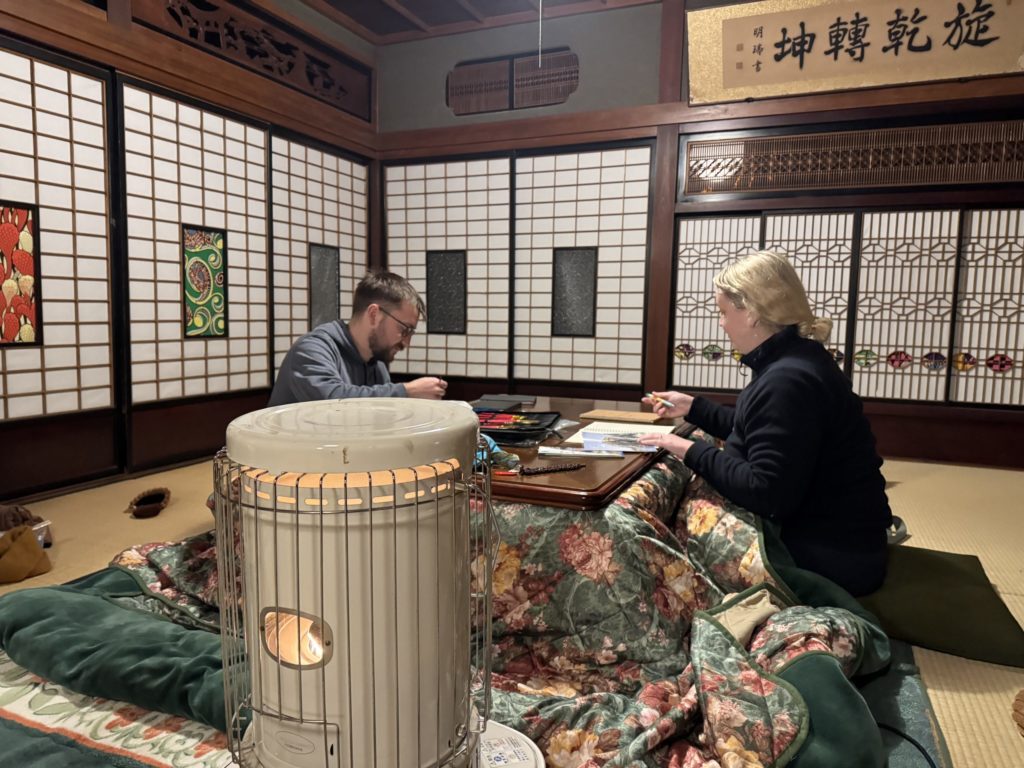
Let me introduce a traditional part of winter life in Japan: the kotatsu.
Winter in Japan can be very cold.
Traditional Japanese houses were designed with good ventilation in mind, which means they are not very efficient at keeping the entire house warm.
This is where the kotatsu comes in.
A kotatsu is a low table with a heater underneath, covered by a thick blanket.
The blanket traps the heat, warming the space under the table rather than the whole room.
It is more comfortable and warmer than you might imagine.
People naturally gather around it, and it creates a cozy space for conversation and relaxation.
Even today, the kotatsu remains an essential and beloved part of Japanese winter life.
A History of the Kotatsu
1. Origins — The Irori (Sunken Hearth)
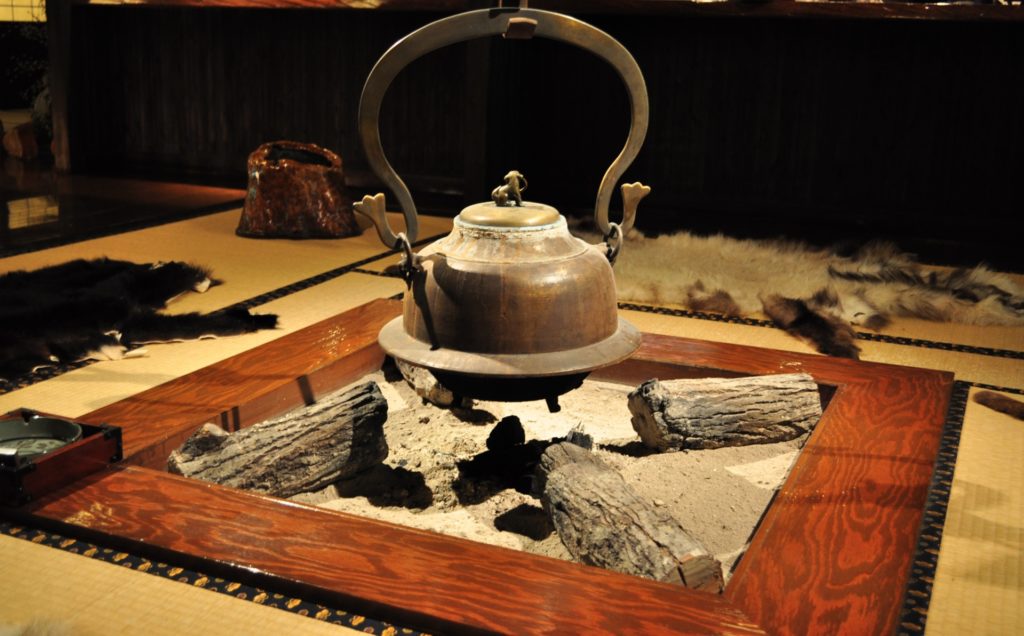
The kotatsu originates from the irori, a traditional Japanese sunken hearth.
People would place a wooden frame over the fire and cover it with cloth to keep warm—this is considered the prototype of the kotatsu.
2. Horigotatsu — Muromachi to Edo Periods
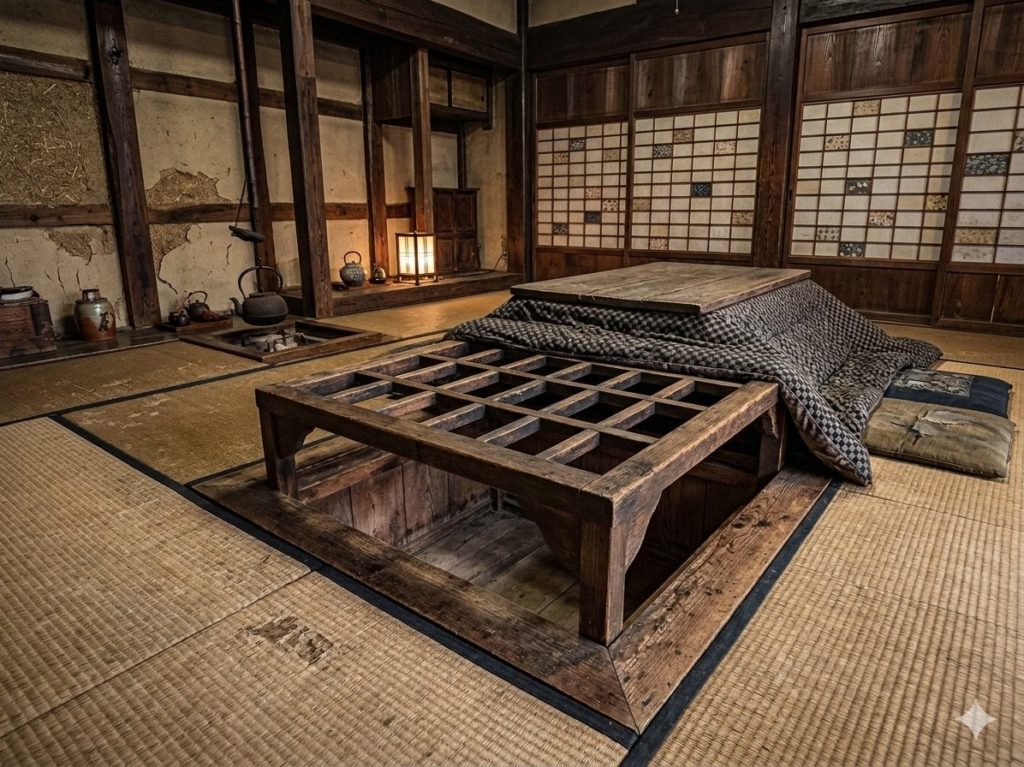
Later, the horigotatsu was developed by digging a pit in the floor and placing charcoal inside.
Because it retained heat well and stayed warm for a long time, it spread among samurai families and wealthy households.
3. Oki-kotatsu — Late Edo Period
A portable version that did not require digging into the floor appeared.
Since it could be moved and used only during winter, it became popular among ordinary people.
4. Electric Kotatsu — Showa Era
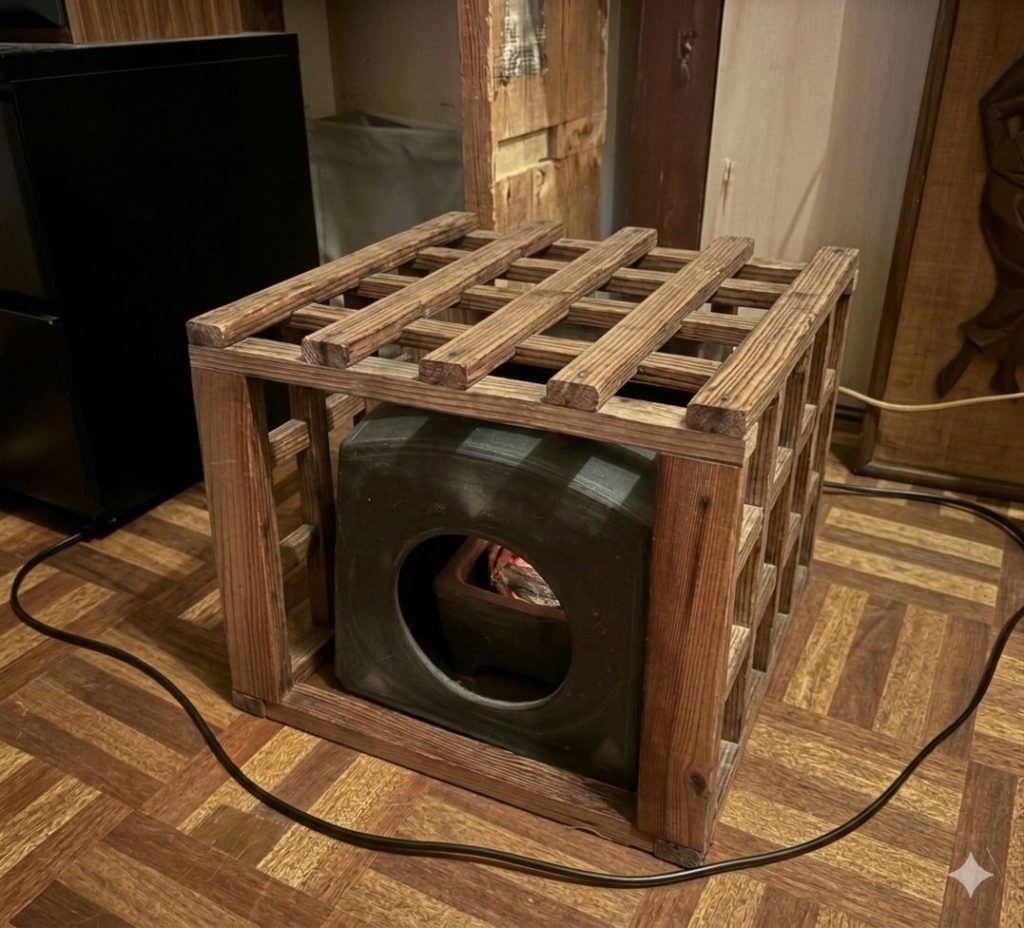
In the Showa period, electric heaters replaced charcoal.
These kotatsu were safer and easier to use, and they spread across Japan during the period of rapid economic growth, becoming the standard form we see today.
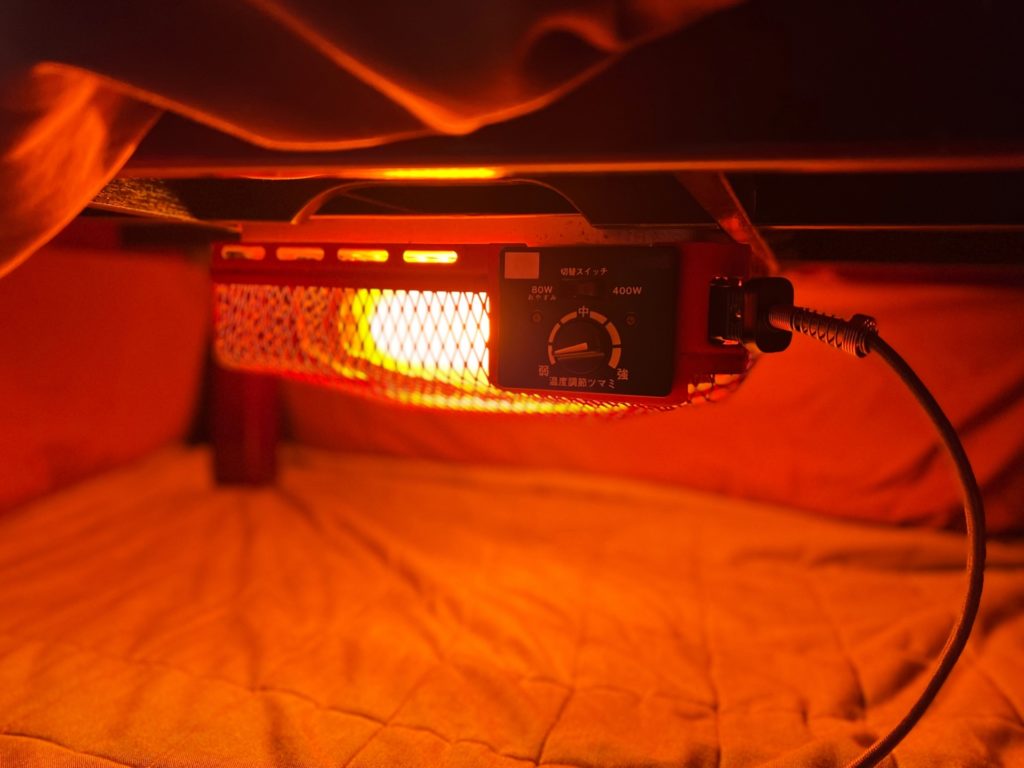
5. Kotatsu Today
Modern kotatsu are energy-efficient and comfortable heating devices.
They are used not only in traditional Japanese-style rooms but also in Western-style interiors, and are even introduced overseas as a unique part of Japanese culture—known as the Japanese kotatsu.