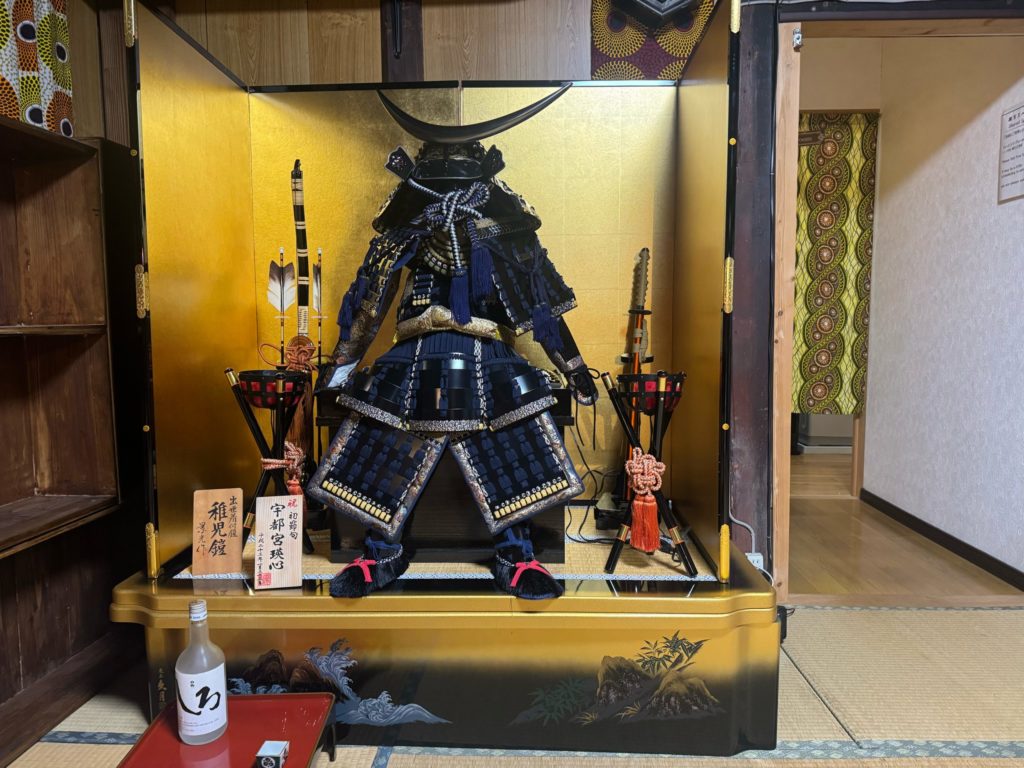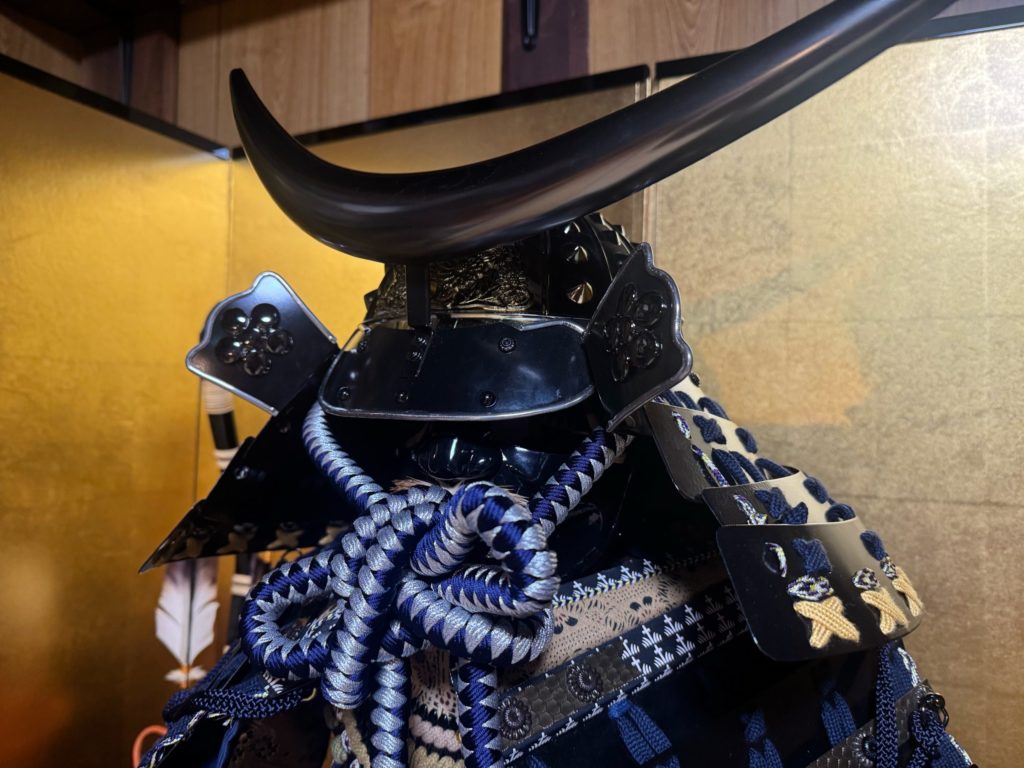
Gogatsu Ningyo are traditional Japanese decorations.
They are displayed to wish for boys’ health and happiness.
People usually decorate them from April for Children’s Day on May 5.
These decorations are based on samurai culture.
They show the hope to protect children and help them grow strong.
Structure
- Armor and helmet: protect the body and keep away bad luck
- Samurai dolls: dolls of warriors and heroes
- Bows and swords: symbols to drive away evil
Meaning and Origin
Gogatsu Ningyo comes from Tango no Sekku.
In the past, this day was used to protect people from illness and bad luck.
Samurai families displayed armor and helmets to protect their children.
Later, this became a tradition to celebrate boys’ growth.
History
This custom became popular during the Edo period.
- Samurai displayed real armor
- Common people displayed dolls
This is how Gogatsu Ningyo developed.
Difference from Koinobori
Gogatsu Ningyo are often displayed with koinobori.
- Koinobori: displayed outside
- Gogatsu Ningyo: displayed inside
They both show the wish to protect children.
At my guesthouse, we display a samurai doll based on Date Masamune.