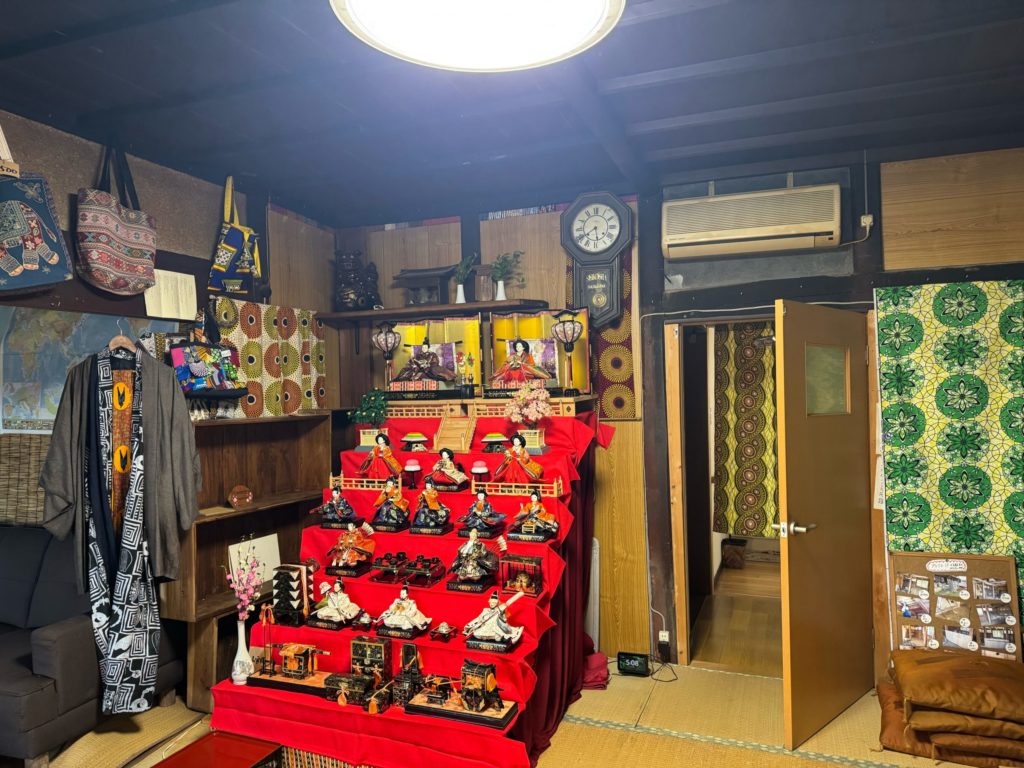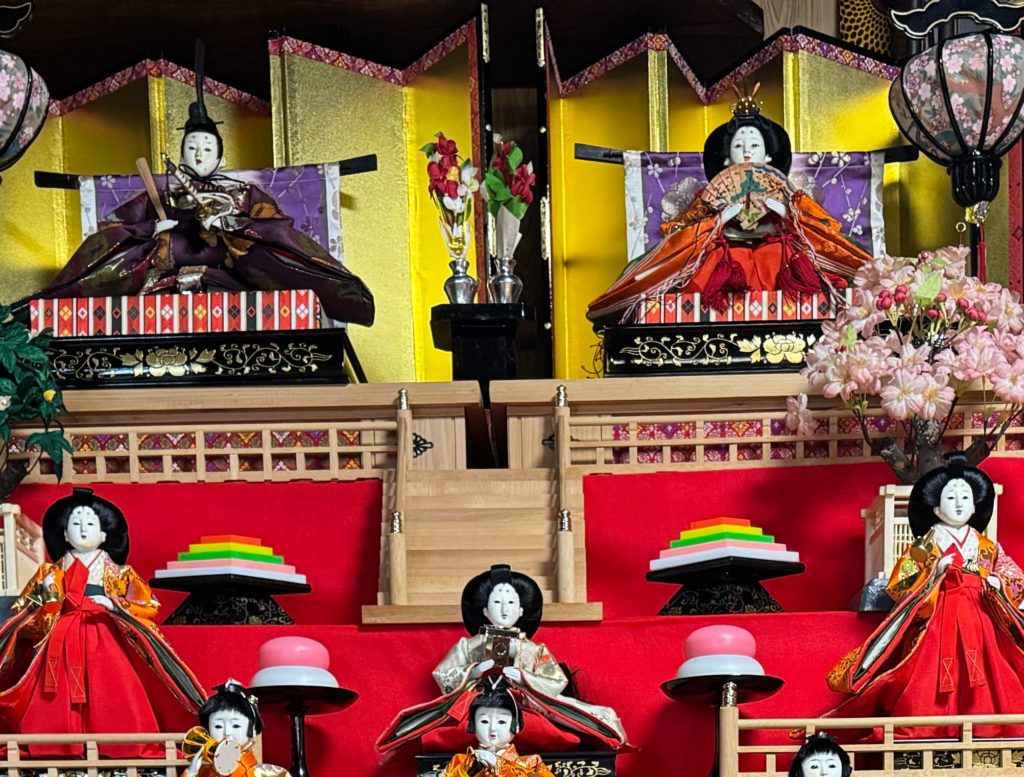
Hina dolls are traditional Japanese dolls displayed for Girls’ Day on March 3.
They represent the imperial court, modeled after the emperor and empress.
They are displayed to wish for girls’ health, happiness, and growth.
Hina dolls are also believed to protect children by taking away bad luck in their place.
This idea comes from an old custom called nagashi-bina, where people floated paper dolls down a river to carry away misfortune.
There is also a saying that if you put the dolls away too late, it may delay marriage in the future.
🎎 Structure
Hina dolls are usually displayed on tiered platforms:
Top tier: Emperor and Empress (main dolls)

Second tier: Three court ladies

Third tier: Five musicians
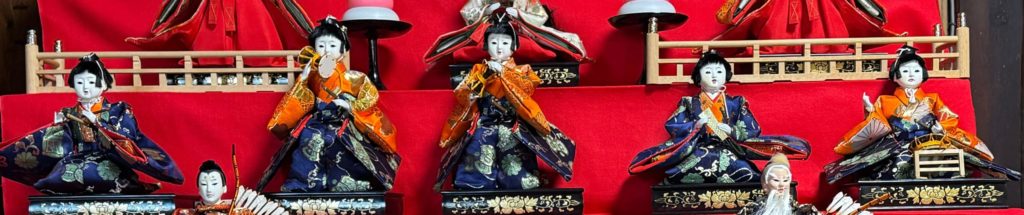
Fourth tier: Two guards (ministers)

Fifth tier: Three helpers

Below these, miniature furniture and wedding items are often displayed.
🏯 History
The tradition of Hina dolls began in the Heian period and developed into its current form during the Edo period.
It comes from two customs:
- Aristocratic doll play (hina-asobi)
- A purification ritual (nagashi-bina)
These traditions combined to create today’s Hina dolls.
At my guesthouse, we follow the old lunar calendar, so we display Hina dolls from March until April 3 each year.